Unknown's avatar

About Visually Impaired Pip

I am a visually impaired, dyspraxic person with CVI. I don’t always see things even when they’re right in front of me. Follow my musings and I hope we don’t get lost.

What have I been up to?

Hello, 

I am back after a short break, getting back to work and managing other things I had to had to get back into the balance of managing stuff. I am back now. 

I have been doing OK. Just a bit tired. The past week I have been off work on holiday and I have a few days off left. It has been nice, but because of the weather I have been unable to social distance outside with my friends. I am still not feeling comfortable enough to sit inside a coffee shop or restaurant. Which is frustrating because I want to see my friends. But we had video chat the other day so that was nice. 

What has also been good is being able to go for my sport massages again. Last week I went for one and found that I had a few knots in the middle of my back where my spine meets my shoulder blade. But I have new exercises to continue with so they should help. 

Another thing I am happy about is that Rugby League is back on. So now on a Saturday I can watch NRL in the morning and Super League in the afternoon. However, I am not getting up at 5am to watch the first set of games, I’ll just wait until mid morning and watch those. The problem is I am back at work on Saturday so I’ll miss the matches. Booo!!! I am glad rugby is back. I enjoy it. I never really understand the excitement around football, but rugby is something I can get into. 

In general I don’t have much to talk about as there’s not much going on. So I’ll leave it there for now. Really this was just a quick catch up post and I’l check back in later. 

Stay safe, 

Twitter: @PhilippaB

Instagram: @VisuallyImpairedPip

Self Care

Hello again, 

As I have been back at work now for a good few weeks I thought I’d share with you the importance of self care. 

Self care is important, especially now when the world is adjusting to trying to find a new normal. What is normal anymore? We’re all having to adjust and learn how to cope with new ways of living. One of which is masks. Now I’m not going to get into a discussion about wearing them. That is not the point. The point is we’re adjusting to so many changes and wearing masks is one of them. 

So thinking about self care we must consider looking after our skin more. When I come home, as well as washing my hands I wipe my face. Before I go to bed I put hand cream on and use face cream. Not only is it important to practice good hygiene, but we also must remember to look after our skin. This means finding a good skin care routine. If you would like to know more about this please head over to Lukes blog as he has a lot of information on skincare products. 

Besides skin care being really important right now, the thing I am trying to do is think about how I’m spending my time. I am trying to get back into listening to audiobooks. They are a nice way to relax and they help pass the time when you are washing up or dusting. 

sA blue bath bomb in the water, fizzing.The other thing I am remembering to do is have a nice bath with a bath bomb rather than normal bubble bath. It’s important to feel like you’ve had a good relax. Baths are the perfect thing for this. You can try switch off and just be. You’re not watching TV, you’re not listening to music, you’re not tidying up, you’re just being in the moment. Let’s face it, that is something we hardly ever do. It was something we had to try and do during the period of being at home during lockdown, but now we’re easing back into this new way of living we need to remember to try still have those moments where we can just sit and do nothing. Where we can just spend time sat with a cup of tea. That’s why I think baths are my perfect option. You don’t have to feel like you should be multitasking. You’re in the bath, you might as well relax. 

If you want to, I would check out Philippa Claire’s blogs, there’s some wonderful things on there around self care and managing your time to make the most of your time. 

Self care is something we need to do. It is not about being selfish, it’s about thinking ‘what do I want?’ You can’t do your job well if you are run down, you can’t look after others if you yourself are run down. Our bodies and minds need time to relax and recharge. If we take time daily to do something we enjoy, go outside, go for a walk, have a nice cup of tea, do some drawing, we can do wonders for our health. 

Now more than ever we need to do this. But we also need to ask ‘what do my friends need?’ maybe just dropping them a text asking how they are, ask them what they’ve been up to? Doing this can also help our own well-being because we then know we are not alone in how we feel. It is a difficult time for everyone and maybe your friend could cheer you up? Or you could cheer them up? 

Be kind to yourself:

Text a Friend

Make a cup of tea

Run a bath 

Put the washing outside rather than in the drier. Yes this makes me happy. 

Ask if someone would if they would like to go for a coffee, or you could sit in their garden. 

It’s all about the little things which could make you or someone else smile. 

I’m off for now. I’ll check back in later. 

Twitter: @PhilippaB                                                                                                         Instagram: @VisuallyImapiredPip 

Books So Far in 2020

Hello again, 

Today has been my day off work, so I have got a lot of stuff done around the house I needed to get done. Now that’s sorted I can sit down to write my blog. 

At the beginning of the year I wrote about how one of my goals was to read more. My brother bought me an Audible subscription which I Have deffinatley made the use of so far. I tend to go through phases of listening to lots of books, then stopping for a while. But now I am getting back into it. So here’s a list of books I’ve on my Audible bookshelf. 


IMG_1032

Neurotribes: The Legacy of Autism and How to Think Smarter About People Who Think Differently 

I am currently listening to this and it is an interesting read, I’m learning so much about the History of Autism and how this history has shaped the world we live in today.

I absolutely loved this book. The women discussed in this book come from so many different backgrounds and they all have a lesson to teach us. Their are modern women, women from history, women who you might not have known much about. One woman who stood out to me was Coco Chanel, a person who’s history I knew nothing about. I found myself wondering why I knew so little. I 


have added her to my list of women I must read about. She was not only a style icon but a woman who new what she wanted and was not going to let anyone get in her way. 

I won’t discuss anymore of the women in this book, because I would highly recommend giving it a read. People often discuss powerful men in history, but they forgot to talk about how they had influential, powerful women stood behind them such as Indira Gandhi. 

This book is currently on my shelf. 

In Search of Black History with Bonnie Greer

Currently on my shelf. 

I found this book to be quite interesting, it has allowed me to now consider why people behave the way the way do. 

This book I absolutely fell in love with, from the moment I hit play. So many things Laura James mentions I found myself agreeing with, I had never read a book I could relate to in so many ways. 


I am thankful I found this book. 

Sandi Toksvig is someone who you just want to hug. I love her on QI and on Bake Off. When I saw this book advertised I knew I had to listen to it because she is such an incredible woman. She fights for women’s rights and I think this book is so powerful. There are many women in history who go ignored and Sandi’s book really opened my eyes to just how much. London is one of the busiest cities in the world and to go on an adventure with her on a London bus to discover women in history was an absolute delight. 


A podcast I found 

Currently on my shelf. 

The Forking Trolley: An Ethical Journey to The Good Place

James M. Russell

I absolutely love The Good Place so when I saw this I just had to buy it. It really made me laugh, it discussed the lengths at which the show went to try and get everything right. So that there could be no holes in the plot line, especially because they were dealing with something as tricky as Ethics. If you are a fan of The Good Place I recommend reading this. 


So that’s it for this week, I just wanted to do a bit of a catch up on what I have read, what is on my shelf and what I hope to read in the future. 

The books I read tend to be history or biography. I love to learn about people and to understand events and places so I can expand my knowledge of the world and the people we share this Earth with. The more we understand one another the more we can move forward together to create a more equal and positive world for us together. 


Thank you for reading and if you have any book suggestions then let me know. 

I’m on Twitter: @PhilippaB

I’m on Instagram: @VisuallyImpairedPip

Beary Quiet

Hi,

For a long while I struggled with sleeping, one of the reasons was down to my room not being dark enough. So we got some black out blinds fitted. They work quite well. However there was also another issue, noise. No matter how quiet you might think it is, as soon as I lay down to shut my eyes I can hear everything. 

When I say I can hear everything, I mean everything. From that weird noise the fridge makes every so often, to a car outside. I decided I would purchase some ear plugs. Searching online I came across a company called Beary Quiet. The name made me chuckle so I decided to check out the reviews. People had left some great reviews on Amazon so I thought I’d give them a go for myself. 

IMG_1649

On Amazon this is what they have to say for themselves:

‘DESIGNED FOR HIBERNATION…

Small But Mighty

Our slow rebound foam is designed to form a expansion seal against the walls of your ear canal. Activating a 37dB (decibel) barrier to noise.

  • Enabling you to achieve REM Sleep (Rapid Eye Movement)
  • Flared bell shape increases sound absorption to bounce unwanted noise
  • Boosted Fibre Blend forms a safer structural design. Preventing any risk of the plug disintegrating in your ear when in use

Comfortable Sleep

We engineered our earplug with Soft Sonar Foam which has a premium texture verses the traditional sponge foam earplugs.

  • Key benefit being, it’s comfortable when worn and it has an improved grip within the ear canal when you sleep

Noise Reduction

Beary Quiet earplugs dampen noise around you by 37 SNR dB (sonar decibels). They won’t block noise entirely but there’s a reason behind this…

We’ve engineered our earplugs to provide a perfect harmony of reducing unwanted noise and permitting important audible alerts such as smoke alarms, home invasion and most importantly your alarm clock!’

They arrived fairly quickly and as soon as they turned up the first thing I noticed which I really liked was the packaging. It comes in a circular tube, with a picture of a bear on it. I would like to think it is recyclable, which is better for the planet. Inside the tube is a packet of 30 earplugs. You also get a little tin to keep them in during the times you’re not using them. The earplugs themselves are black and feel quite squishy. 

There are different sorts you can buy but I opted for premium foam reusable ones. You get 30 in a pack. 

I have had the earplugs since….late May this year. So I thought I’d let you know how I’ve got on with them. As I mentioned before I really struggled to fall asleep, due to many reasons, one of which was the slightest noise. 

You take them out the packet, they all come in one big plastic bag, rather than individual bags. Roll them between you finger and thumb until they are stick thin. Then place them into your ear. Hold them inplace while the foam expands and then let go. Beary Quiet says they block  out up to 37 SNR DB of noise. So obviously they don’t block out everything. I can still hear certain things, but the sounds are now nicely muffled. However, this is only when I am starting to fall asleep. Once I’m off to sleep I don’t wake up because I’ve heard a noise. I must be quite a deep sleeper when the conditions are right. I genuinely love them and I will be buying them again. They have made such a massive difference to my sleeping.

As for the reusableness… that’s a word right? meh… it is now, I think they’re living up to that. I use mine for 2 nights and then put them in the bin. I am concerned for my ears so I want to make sure they stay as clean as possible. So I don’t use them more than twice. 

I would recommend Beary Quiet to anyone who is struggling with sleeping due to noise. It is now July and I have been using them since late May. Even if I can’t sleep because I can’t switch off, the noise reduction is very beneficial because it’s one less thing I have to contend with. Meaning if I can’t sleep, which has happened, I can just lay their and enjoy the quiet as much as possible. 

I would just like to point out that I have written this blog post reviewing these earplugs without any endorsement from the people of Beary Quiet and I hope that you maybe try them out to see for yourself. They only cost £12.99, but on Amazon where I bought them, directly from Beary Quiet, they cost £8.99. Click here if you to want to hibernate peacefully, without missing your alarm clock in the morning. 

Whilst I have you, if you have a few pennies spare would you mind donating to my Virtual Fundraising Tin for the British Heart Foundation?

If  have written a blog post about why here.

Right I’m off. 

I’m on Twitter: @PhilippaB

I’m on Instagram: @VisuallyImpairedPip

British Heart Foundation Blog Post with Beth and Philippa

Hi,

Today’s post will be a little different, I’ve teamed up with Biology Beth, a British Heart Foundation funded PhD Researcher. We’re both very passionate about the British Heart Foundation (BHF) and thought it would be a great idea to tell you why.

This blog post will be done as a collaboration, so please sit back and relax and hopefully you’ll learn some cool science things from Beth and I’m here because I bring some info around what it’s like to live with a heart condition.

Let’s get going….

Why are we doing this?

We want to raise awareness for the British Heart Foundation and discuss our passions for such an amazing charity.

This blog post came about because I wanted to do something to raise money for the British Heart Foundation during this period of uncertainty we are going through with COVID-19. I started by drawing pictures on my iPad and posting them on Instagram and Twitter. I’ve got to £125 and I’m very happy. If you would like to donate please go to my Just Giving Page and help to support the BHF.

I then talked to my friend Beth and we were discussing the impact COVID-19 is having on the charity sector and on research which affects lives.

We thought it might be a good idea, considering Beth’s PhD project is funded by the British Heart Foundation to talk about who the BHF are, what they do and why we support them.

Who are the British Heart Foundation and what do they do?

The BHF are a non profit charity, who’s singular aim is to Beat Heart Break forever. One in four of us here in the UK and one in three of us globally will die from Heart and Circulatory Disease. That’s pretty significant. The BHF is the biggest independent funder of Heart and Circulatory disease in the UK.

The British Heart Foundation says “Our research, is the promise to protect the people we love. Our parents. Our brothers. Our sisters. Our grandparents. Our closest friends”.

Key Statistics

Today in the UK:

27% of all UK deaths are caused by heart and circulatory disease.

But its important to note how far we’ve come

Today in the UK:

460 people will die from a heart attack or circulatory disease.

More than 120 people will be younger than 75.

7.4 million people are living with heart or circulatory disease.

280 hospital admissions will be due to a heart attack.

180 people will die from coronary heart disease.

13 babies will be born with a heart defect.

When reading these numbers, as  person who was born with Congenital Heart Disease, it’s very difficult because you see yourself as number on a page. But that’s another reason why I wanted to do this with Beth, because I am not just a statistic, I am the person writing these words you are reading.

If you would like to check out the latest research by the BHF check out this link: Our Research.

A red heart with stitching up the middle holding it together. There is a needle and thread sat underneath.

A heart stitched back together.

Q&A with a BHF researcher

I think while these might seem like a lot of facts and statements it’s important to remember the reasons why people chose to support the British Heart Foundation in so many ways. Which is why I asked Beth if she wanted to do this Q&A with me.

Philippa: Why do you support the BHF?

Beth: I support the BHF as it’s very close to my heart, I lost my grandad to a heart attack and whilst I was at uni my dad also suffered major heart attack. My dad’s rehabilitation involved lots of information from the BHF and aided his recovery.

Philippa: Why is it important to donate?

Beth: BHF are committed to their campaign to beat heartbreak forever. Donations help to fund major medical research and support BHF staff (those that work in the BHF shops and head office). For every £1 donated, 70p goes to funding our lifesaving work. Without medical research we can’t beat heartbreak forever so donating to the BHF is vital.

Philippa: Beth, what is a PhD?

Beth: A PhD (doctorate of philosophy) is a postgraduate doctoral degree, which is awarded to students who complete an original thesis that offers a significant new contribution of knowledge to their field. In the UK, a PhD project is typically 3-4 years full time and 5-7 years part-time. A PhD project is quite a commitment and it’s definitely not easy, but it’s also not as bad as people say, or at least it isn’t in my experience.

Philippa: What is your BHF funded research project?

Beth: My project is in the field of platelet biology in the context of cardiovascular disease. Platelets are important cells in the blood that contribute to clot formation in incidences or vascular injury. During cardiovascular disease we get unwanted platelet activation resulting in clot formation that can lead to events like hearts attacks or stroke. My project is looking at how platelet inhibitory pathways can alter platelet function in cardiovascular disease.

Philippa: What are your research goals?

Beth: My research goals are to finish my PhD in which my funding runs out December 2021 but I have until Dec 2022 to submit my thesis. I’d love to continue the research in the lab I’m currently in, I enjoy the research and I really like the people in my group. My supervisor has given me a lot of support and training to gear me up for a post-doctoral position. Following post-doc positions I’d like to write my own research grants to continue the work to hopefully one day run my own research group (a girl can dream, right?).

Philippa: What happens when you apply for a research grant?

Beth: I’ve never applied for a research grant myself as I’m only a student but I do know that research grants take a long time to write. The funding bodies such as the BHF have certain criteria for what they will fund and they will only fund research that will have the greatest impact. When you submit your application, it goes through rigorous rounds of review which can take a while and you may have to resubmit based on grant reviewers comments. A lot of grants can be rejected on the first round, so it can take 2 rounds before a grant is accepted. Once the grant is accepted it will have a specified start date and end date, with progress reviews throughout the course of the grant. This is to make sure you’re on track with the research and that there is appropriate output from the work i.e. publications etc.

Philippa: Why is heart disease such a big problem?

Beth: 7.4 million people in the UK live with heart or circulatory disease and 1 in 4 people die from heart or circulatory disease. That’s why BHF are targeting the world’s biggest killers – meaning that their work in funding research is vital in order to save lives and reduce those numbers.

Heart disease can lead to heart attacks, angina and strokes which if serious enough can result in death. These cardiac events can be a high burden on the NHS, research for better, more targeted treatments with fewer side effects along with preventative measures could help to reduce those numbers.

There are many risk factors such as smoking, stress, alcohol, high blood pressure, high blood cholesterol, physical inactivity, being overweight or obese, diabetes, family history of heart disease, age, sex and ethnic background. Also, having a heart or circulatory disease can mean that you are at higher risk of other diseases such as viruses, diabetes and vascular dementia (among others).

Philippa: Maybe something people think is surely when you’ve had a heart attack, that’s it right, there is nothing that can be done?

Beth: In most cases if you’ve suffered a heart attack you’re likely to have a stent fitted (which is where they use a meshwork to open up the blocked artery to gain blood flow back into the affected artery). After having a stent you’re likely to be a cocktail of medication to aid the hearts repair which are typically a combination of anti-platelet drugs to avoid unwanted platelet activation. Most people tend to make a full recovery after having a stent fitted, along with appropriate medication and cardiac rehab most people that have suffered heart attacks can go on to lead a relatively normal life.

Philippa: What’s the difference between a heart attack and a cardiac arrest?

Beth: A heart attack occurs when a blocked artery prevents oxygen-rich blood from reaching a section of the heart. If the blocked artery is not opened quickly that part of the heart can begin to die. The longer without treatment the worse it can be. Symptoms can be slow before the heart attack. The heart continues to beat (unlike cardiac arrest). Whereas, cardiac arrest occurs suddenly and without warning. Triggered by an electrical malfunction in the heart which causes an irregular heart beat. The pumping action is disrupted and cannot pump blood to the brain, lungs and other organs. Typically a person will lose consciousness and have no pulse. Cardiac arrest CAN happen after a heart attack, heart attacks increase the risk of sudden cardiac arrest.

Q&A with a Heart patient

You’ve had a Q&A with a BHF Researcher, but how about a Q&A with a heart patient? Beth has some questions for myself.

Beth: What other implications does having a heart condition have on your life?

Philippa: I think this is an interesting question, obviously every heart patient is different. I myself was, well, fortunate, I don’t know if that’s the right word, to have my surgery at one week old. From then on its been finding out one problem after another…

I think this has meant I’ve had my fair share if not more of hospital appointments. There are things I have to be careful with more so than others. I think one thing which people may not consider is the emotional impact of a heart condition. Obviously you get one heart, once it’s damaged, that’s kind of it. There are things we can do, like in my case, holes can be repaired, a lot of wonderful things be done. But repairing something is about dealing with working with what you’ve got… The damage of a heart attack for example, cannot be reversed…. I think it just feels quite stressful and upsetting….

Thats kind of one of the reason I got involved with the BHF… I heard about these Zebra Fish which can repair their own hearts, and researchers wanted to look into that…. Science is incredible… but we need to understand something before we can do anything else and I think when I heard about these zebra fish I had a sense of hope, that maybe one day…. we could repair a broken heart… I think there’s a lot of emotion around this question for me, because ever since I was born, I’ve dealt with many problems and who knows if they are all linked?

Beth: Do you take any tablets?

Philippa: I take two kinds of tablets, I used to be on one kind, then two, then back down to one…then my toes went purple, so I’m back on two. They can be quite expensive, about £18 or so a month for two boxes, for one month. I’m paying about £216 a year for tablets. Roughly since I was 13 let’s say that’s about £3240 I’ve spent over 15 years, to stay alive. However, there is an option that if you are on tablets for life you can get 3 months for the price of one (which is what I do) but that’s still expensive. I’m paying for a problem no one created, it just happened. It’s life, I manage with it, although that’s not to say it’s easy. It’s hard and stressful, but you manage it.

Beth: As a heart patient what does ongoing treatment look like?

Philippa: Due to the nature of my many health issues I have various different appointments, I have high blood pressure caused by a malfunctioning kidney so I’m on review for that. When it comes to my Heart health I go for an appointment once every 2/3 years. You might not think it’s much, but because of all the other health complications I have this is just another appointment to have to cope with.

When I’m at the hospital I have an ECG and I have an ultrasound, which is rather cool because you get to hear your heart beat. I don’t always get to see it because of the side I’m laying on. I then have an MRI scan booked because ultrasounds are limited in what they can show and the Drs want to get as full a picture as they can.  (I have had number of these for a variety of health problems, such as my kidneys) I normally go the BRI for this and again, the people there doing my MRI are amazing, they are caring and help me to feel as comfortable as possible.

I go to the LGI for my heart appointments because that’s where there is a specialist Heart Unit. It’s pretty much an all day job as we have to travel there and back. The staff at the LGI are amazing. The heart unit is wonderful and there’s another charity called The Children’s Heart Surgery Fund which works closely with the unit to support families and those in hospital to be as comfortable as possible. Dr Waterson, one of the surgeons who did my surgery is responsible for setting up the charity. One of the lovely things they do for the children is when you’re in hospital and you’re having your surgery they give you a bear with a heart on, called Katy. My Bear, which I still have is called Rosie. They also give each child a medal for being heart hero’s, which they truly are.

The BHF and Coronavirus

The British Heart Foundation are creating a wealth of information around Coronavirus and how you can stay safe. There was an article posted on the BHF Twitter account about going into hospital during this time. This is is important as hospitals are starting to get patients back in to be able to have the surgery they need.

Coronavirus has had a massive impact on minority backgrounds such as the Black and South Asian Community. There are a number of causing factors and it has been highlighted in an article by the BHF. While the purpose of this blog post is to raise awareness of the need to donate and fundraise for the BHF, we did not want to ignore the higher death rate from Covid-19 and we wanted to ensure that the information is made available in this blog post for those who suffer from Heart and Circulatory Disease, as this is the purpose of this particular blog post. This information can be found here.

More from Beth

If you want to hear more about what it’s like to be a BHF PhD researcher go check out Beth at:

Blog: www.bethology.co.uk

Twitter: @beth_webb29
Instagram: @_bethology

More from me

Twitter: @PhilippaB

Instagram: @VisuallyImpairedPip

Thank you for reading our blog post around the need to keep fundraising and the importance of the BHF in todays world. I am very grateful to Beth for giving her time to help me write this. It would not have worked without her.

If you would like to donate to the BHF please go to my Just Giving page to donate.

Please remember that Heart Disease is the biggest killer globally and that one day, together we can Beat Heart Break Forever.

“In 1961, more than half of all deaths in the UK were attributed to heart and circulatory diseases (320,000 deaths).”

“Since the BHF was established the annual number of CHD deaths in the UK has fallen by more than half”.

Additional Links:

Visually Impaired Art with drawings for The British Heart Foundation

www.bethology.co.uk

https://www.bhf.org.uk/what-we-do/who-we-are

BHF Statistics Factsheet – UK 

https://www.bhf.org.uk/informationsupport/publications/research/our-research-almost-60-years-of-lifesaving-breakthroughs

https://www.bhf.org.uk/informationsupport/heart-matters-magazine/news/coronavirus-and-your-health/going-into-hospital-during-coronavirus 

Welcome Page 

British Heart Foundation Virtual Tin

Hello,

Over the past 3 months since the start of the lockdown in the UK I have been seeing what I can do to help out a charity which is very important to myself, The British Heart Foundation.

A6B21F89-E075-4DC3-B615-AD9839E04468

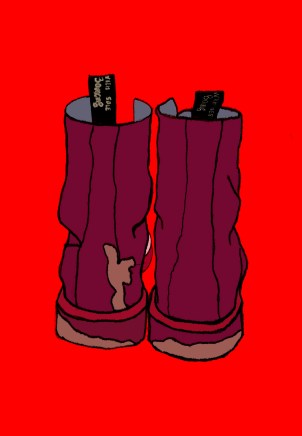
Dr Marten boots: coloured in different shades of red, the Dr Marten label on the back of the shoe is still yellow.

I was born with Congenital Heart Disease and I wanted to try do something to raise money for the charity. After having a think I decided I would draw things which were red or had red items in them. The first picture I drew was of my Doc Martens, but I did them in Red. I then decided I would draw a Converse shoe.

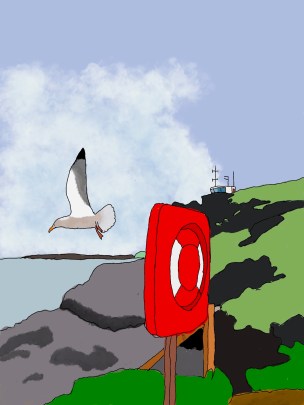
Over the weeks I changed from drawing items to drawing pictures of places. These places were mostly beaches in Saint Ives. If you’ve ever looked at my instagram you will see that I love Cornwall and Saint Ives very much. Drawing the images of Saint Ives beaches was fun, it was nice to be able to play around with Procreate and try out the various brushes and pencils which they have on offer. I then decided to try a different app called Sketchbook. Again this app comes with a variety of brushes and pencils.

 A white seagull has taken flight from its perch on top of a life ring. In the background are rocks, and the ocean. On top of the hill is a lookout station for boats.

A seagull by the coast

A red heart with stitching up the middle holding it together. There is a needle and thread sat underneath.

A heart stitched back together.

These drawings were posted on my instagram and Twitter over the past few weeks. So far I have managed to raise £105. I am very thankful to those who have donated and helped me to raise this money. In addition to my pictures, myself and my friend Beth have been working on something we hope to share with you soon. Until then I just wanted to let you know about the pictures I have done so far and that we do have another thing coming which we hope you will find interesting.

If you would like to donate then please follow this link. 

To give you an idea of where your money goes please follow this link to the BHF annual report 2019. 

Heart Disease is the biggest killer globally. The British Heart Foundation is working to Beat Heartbreak Forever and one day, with your help they can make this a reality. 

Thank you for Reading my post, I know it’s a little different than normal. But the BHF is very important to me and I wanted to let you know this thing me and Beth have been talking about is coming,

I’m on Twitter: @PhilippaB

Instagram: @VisuallyImapiredPip

Leeds Train Station

Hello again, 

So today I thought I would write about my experience of going back to work. I am anxious and quite scared about public transport and I work in quite
a busy environment. In order  to get to work I need to get a bus and then a train. It can take me an 1 hour an 45 minutes to get to work. 

Work closer to home I hear some of you saying? Thats neither here nor there right now. 

I have been working to build more independence around travel as well as other areas and today with the help of the same person,  who works with visually impaired and blind people we decided to test out the route I would normally do on my way to and from work. 

My mum dropped me off in town so I did not need to worry about the bus and then we met up by the interchange. It was about 9:30 and we had arranged to meet at that time. We had just missed the train. So we went and asked them about help with getting on and off the train. Normally I just get on with the pushing and shoving because I want to be as independent as possible, and yes I realise I need to change this attitude. 

We went into the information centre upstairs and when you go in through the doors you are greeted by a mess of stanchions which did not help. I asked if I could follow the person I was with as he was wearing a bright blue coat so I just focussed on him. We went and asked the man in the ticket office who was very helpful. When we asked about getting on the train with assistance they were more than happy to get me on the train should I ask for help. One tick in the box for ensuring I can get on the train, I just need to do in practice now. But I feel reassured. 

We decided to walk to Forster Square because the next train from Bradford Interchange was in an hour and that was not going to work. We walked across town, not too far, and I was thankful I’d taken painkillers before I left home. When we arrived we went to buy tickets and I forgot what kind of ticket we wanted. When there’s a lot going on I become very overwhelmed. I was thankful it wasn’t busy so I did not need to rush. 

After we purchased our tickets we went through the barrier and we were told it was the train on the left. Getting on the train was difficult as I have not been on a train in 3 months. The person I was with is called Simon, and he advised me that the carriage to the right was cordoned off and I could not sit there. He also explained that as this is the first carriage, that I was not able to sit in the end part where the door to the drivers compartment is. So we turned left. The seating on the train is all blue, with yellow and blue signs put over the top of the seats saying they are

my guide cane is in the foreground, there are two blue seats the background facing me, with two 'Out Of Use' signs pace on the tops of the seat.

Where to sit?

 out of use. This included the disabled seats which you normally come to first. I can’t explain the layout fully as I was trying to deal with a lot of visual information at once. 

If there are seats of two on either side, only one person can sit in that set of two. There is then another row in front


 which is completely out of use. The next row of seats are for a group of four people, where again only one person may sit. Simon asked where I wanted to sit and


described to me where that seat was. I went and sat down and he then sat on the opposite side of the train.

Once we had pulled into Leeds we go off the train and I thanked another passenger who asked if I needed help. This was great because its nice to know people are still willing to assist. We got off and Simon explained the things to be weary of that had changed, for example: there is now a yellow strip of tape along the floor which advises you to not go beyond that line until the train arrives. As we walked forward a man in a high vis jacket approached us and asked us to keep to the left, and would we need any assistance. He offered to show us the new layout of the station. 

We said yes. At this point for any of you familiar with Leeds station we pulled in on platform 8. We were advised to keep to the left at all times, so that meant walking under the escalators, where the lifts are located behind you under the concourse. He then pointed out that there was a big silver barrier running from the ticket gates across to the escalators going up.  The escalator going up is currently out of use. You then walk through the barriers and there is no more one way system. Just blue stickers on the floor in rows. 

If you’re looking back at the entrance to the ticket barriers you will see red for no entry and green for entry. Entry to the platforms is on the left and entry out from the platforms is on the right.  

If you are going back to the ticket barriers in the middle they have a silver barricade to keep people from going the wrong way. They also have some staff stood behind screens to help you get through the barriers should you need it. 

(I did not notice this on the end barriers where the disabled barriers are- give me a moment I will move onto this.)

Once you have moved through the barriers as though you are going to get the train, turn left and move past the information point (which is currently closed- don’t worry I’ll move onto this) and turn left again as though your going down the platform towards platform number nine. There are steps at the end to the bridge which runs right across to platform 16. These steps are then all one way which is perfect because no one is rushing down at you. Once you’re down the steps you then walk back along to where you need to be. It does add time to your journey, however because it is all one way you don’t need to worry about people walking towards you and not moving out your way. 

Now, back to the information point and the disabled access barriers being closed. I asked where I could go to get help should I need it. I suggested the information point in the middle of the new atrium. However this is also closed. I was advised to look for Northern staff in blue, or people wearing yellow high vis jackets, I could also ask LNER in red, they could always get me the help I need as they’ve been great in the past. The staff are dotted around, I noticed they were by the entrances into and out of the station on the left and right. They were also stood in a group up by the barriers where the barricade is positioned in the middle. So I can just look for a cluster of yellow. When you pass through the barriers there are more yellow high vis jackets as well. They are stood right in the middle. 

I feel a little easier knowing I’ve gone back into Leeds on the train for the first time in three months. But I did have Simon with me, who was a massive help. I know going in on my own will be quite different. But I will try it and see what happens. 

I’m feeling quite drained now and I have my bath running so I will go and check on that. 

If you have any questions around how you can make life easier for disabled people like myself in these extraordinary times then please just ask. The important thing to remember is, we don’t expect you to have all the answers, because we don’t either. We just don’t want to be an after thought. We need to be included in the process from the beginning to ensure our access needs are met. 

Thank you,

Philippa B 🙂 

Twitter:@PhilippaB

Instagram: @VisuallyImapiredPip 

Scoliosis Awareness Month

Hello again,

As June is Scoliosis Awareness Month I thought I would write another blog post about it. I am more than just my curve, but my curve gives me a lot of pain. Therefore I have to be aware of my posture all the time. 

The problem with this is I’m too busy being aware of my surroundings as a Visually Impaired Person. So my curve is another element I must try hard to be aware of. It takes a lot of energy to be aware of you posture. However, it also takes a lot of energy to not be aware of it. 

The more you let it slide the more painful it becomes because you have tensed up and you have allowed your muscles to set and become tense. You start to hunch over, you hold yourself in a position which might be natural to you. But over time becomes uncomfortable. 

One of the reasons I am glad the lockdown has eased, is that I can now go for a sport massage. Some of you might not think this is reasonable. But when you are in pain and you’re taking tablets on a daily basis, you really need to consider the option of a sport massage. I chose to go for one as I knew I would be expected to go back to work and needed to feel as comfortable as possible. Which on top of all the Coronavirus stuff I also had to feel comfortable with my back. 

I had not been for a sport massage since early February, it is now June. Although I have not been in work since March, it does not mean I have been without pain. 

When I went the guy who does my sport massage did wear PPE, so it was as safe as it could be. He obviously washed his hands as soon as he came in. There was also hand gel for us to use, which we did. When we finished we went straight home and washed our hands. 

My back feels a lot better. My muscles feel soft. Where as before they were hard and tense. We have another appointment booked for a months time. The pain is still there. But I am able to now sit up straighter and lean to both sides better than I could before. 

Due to Coronavirus a lot of operations and hospital appointments have been put on hold. This means those waiting for their Scoliosis operations have had to wait too. Surgery is usually a last resort for a lot of us. The pain gets to be too much. When you have the surgery you are in so much pain afterwards. You’ve had two metal rods, known as Harrington Rods placed down either side of your spine and screwed together with your spine in the middle. This is done in an attempt to stop your curve getting worse and to correct the curve. 

Personally I’ve never had it done. However if you go to SAUK you will find a lot of info around the surgery and what comes afterwards. It’s scary and there can be complications. But the level of support you receive is immense. I have spoken to physios who’ve worked with those who’ve had it done and they tell you how difficult it will be, they don’t sugar coat it. But they also tell you that they will be there to help you get through it. 

Thank you for reading my blog and don’t forget to check out my other posts on Scoliosis. 

Twitter: @PhilippaB

Instagram: @VisuallyImpairedPip

Scoliosis- What is it? How does it impact me?

Hello again, 

It has been a while. 

Today I thought I’d talk about Scoliosis. I have not ben able to go for my monthly sport massage since the end of February and I am defiantly feeling it. 

My spine is curved in a S shape, but in the wrong way. One side of my back is stuck out and one shoulder is higher than the other. Thankfully my back curves away from my heart, I was born with Congenital Heart Disease. 

From theScoliosis Awareness UK website, ‘Although many people have not heard of scoliosis it is not rare. 3 to 4 children per 1000 need specialist supervision.

Scoliosis can affect people at different points in their lives. It can happen:

As far as I am aware my Scoliosis started to show when I was a teenager, maybe a little younger. To give you an idea of how curved it is, well, my spine almost touches my right shoulder-blade. Right now, it hurts. 

When I was younger I was told I would probably not need the surgery. That bracing probably wouldn’t be needed. It was left up to us to decide. However, I have so many other health problems we found it very difficult to keep track of my spine and the curve. So a few years ago we went to the Doctors to see a muscular skeletal Doctor who informed us it was not a mild Scoliosis and that it was severe. I was angry and upset. I felt let down. Had I have been informed it would get worse I would have potentially considered the surgery. 

The problem is I suppose it’s difficult for Doctors to tell. It is not something I can get too hung up on. I was sent to Physiotherapy and that allowed me to learn to correct my posture. I have done this for many years. Now when I am at work I stand myself near a table as it allows me to put my hands on the table in front of me and adjust my balance so I can stand in a better position for my back. 

I was told by the muscular skeletal Doctor that doing physio and adjusting my posture would make a difference to my pain, it has. It was also suggested to have sport massages. This would relieve the pain and tension and allow my muscles to reset. I like to think of it as them unlearning, allowing me to start again. 

The mix of sport massages and physio exercises  have really helped. Each time I have gone back to have sport massage over the past few months, prior to my last appointment in February, my muscles have been a lot better. My back pain had reduced. My neck pain had reduced. I had  worked hard. 

Some of it is also to do with mindset and being aware of how I am feeling physically. So if I feel I am leaning to one side, I am able to correct this. If I feel my neck is aching, I think about my posture in that moment and really think about adjusting my stance to be better. Right now I am thinking about how I am sitting. Readjusting my back and trying to keep it as straight as possible. 


In no way am I saying it fixes the problem, what it does is allow me to tell myself; ‘OK this hurts, I should book another appointment’. As I went on like this I was able to tell myself every month I will have a sport massage to allow my muscles to reset and start again. 

This link shows you information on pain management. It goes into a few different options, one which I have discussed above, being massage. 

https://www.sauk.org.uk/coping-with-scoliosis/pain-management 

The Scoliosis Awareness UK website has a lot of information around ways to help your posture when standing, sitting or sleeping.        

  https://www.sauk.org.uk/coping-with-scoliosis/posture-and-positioning 

They have plenty of information for you to explore. If you are unsure you can contact the helpline: 020 8964 1166. I have used this to find out information about support available around thinking about surgery. Another valuable resource is their Twitter account, you could get in touch with other people living with Scoliosis. This is such a big help.  

In my experience of Scoliosis I would like people to maintain follow up appointments with their GP. Then you can’t try to understand your curve better, you can manage your pain better. 

Remember if the way you look makes someone else feel uncomfortable then they are not worth your time, if you have a scar, it is beautiful, you are you and you are amazing. 

I you would like to read my other blogs on Scoliosis Awareness Month they are here.

Thank you for reading,

Twitter: @PhilippaB

Instagram: @VisuallyImpairedPip 

After Lockdown Ends

Hello again, 

This post is going to be about the impact of easing COVID-19 on Disabled people. I will also be taking a closer look at what it will be like from a Visually impaired persons perspective. 

Over the past few days I have been worrying about what going back to work will look like. What the new normal will look like. Many disabled people are worried about this too. Making very valid points about how we as a community have been forgotten.

Throughout this whole pandemic the Disabled Community has been forgotten. We exist, we have voices and we have a right to exist. According to Scope there are 13.9 million Disabled people living in the UK. As Dan White rightly pointed out on Twitter, where is the Minister for Disabled people being outraged on our behalf with regards to the lack of support we have had during this lockdown period? 

According to Scope 19% of working age adults are disabled, which means that more than 3.7 million disabled adults work. According to the RNIB’s website ‘As of 2017, there are around 350,000 people on the registers of blind and partially sighted people in the U.K’.

Mik Scarlet tweeted ‘Well, the fears of disabled people being forgotten as lockdown is lifted appear to be founded. In London @TfL & the rail sector seem to be introducing systems that exclude us. No assistance offered at all, no Turn Up & Go & no car zones. Only solution offered? @The_LCDC.’ 

I completely agree with Mik as this has also been the case throughout the whole of the lockdown period. As a visually impaired person I am being asked to practice social distancing. How am I to do this when I have poor eye sight? 

My guide cane is supposed to aid my navigating in general and now helps me to social distance. However, on a normal day people push past me to get on the train. Step over my guide cane to get to priority seats while saying ‘Oh sorry…’ and not moving at all. 

As I write this I am reminded of this exact incident on a train. Another passenger got on, pushing past me as I tried to navigate between the seats. They stepped over my Guide Cane, I pulled it little higher, they stayed exactly where they were, giving no option but to pull my Guide Cane from between their legs and they continued on  to sit down in the priority seat. I said in a sarcastic tone ‘Oh sorry…’ to which they replied ‘Its OK’. Thankfully a woman saw this, moved her bags and allowed me to sit in the other priority seat. If you are able to push past someone in that manner then you need to stop being so self centred. 

Thinking back to Mikes comments around there being no thought by our government to help disabled people with travel, if there has been, I genuinely haven’t seen it. How are Disabled people supposed to deal with the attitudes we already have to put up with- as my experience above shows, and the new ways in which we are expected to live? 

Below I have taken a few Key Points from the Guide Dogs website around assisting visually impaired or blind people when considering social distancing. 

1) ‘People with sight loss will often have difficulty finding a seat. During the pandemic, and when it is possible that some seats are blocked off, it will be even harder for them to do so. Please ask the passenger if they need help identifying a vacant seat and that is a safe distance from other passengers.

2) Bus drivers will always prioritise the safety of all their passengers, but it is essential that vision impaired passengers are able to get off the bus at the correct stop. It can be frustrating and disorientating for a vision impaired passenger to miss their bus stop but this could be even more of an issue during the pandemic as changes to normal road and pavement layouts may be brought in to facilitate social distancing. Added to which, people may find it difficult to ask the general public for help when dropped off at an unfamiliar location.

3) Provide clear instructions when describing a route or when you would like the person to change direction e.g. left and right

4) Having identified the appropriate seat, describe its location (e.g. “just coming up on your left left/right, facing towards/ away from you”) and whether it is airline style or has a table. Before leaving, describe the layout of the carriage including the location of toilets in relation to where the passenger is sitting and the layout of any social distancing restrictions in place.’

When considering these points I would like to link back to my experience I wrote about earlier. People do not afford Disabled people the space they require already, never mind with the impact of social distancing. How are we supposed to feel safe in this new way of living? We are relying heavily on others. As I am looking at this from a visually impaired persons perspective I am extremely concerned there is a lot of talk around one way systems, changing road and pavement layouts, moving seating from inside to outside…all of these elements rely on you being able to be visually aware. 

It appears as though life outside London does not exist to a lot of people at the moment. Whenever you see the news it’s all London centric, as a lot of the time it is. Now apply those same feelings of being ignored by your government during a pandemic but to all the time. We are constantly forgotten, ignored and then when we are listened to we are given the minimum amount of attention. 

It is left to people like myself Mik Scarlet, Dan White, Chloe Tear, Philippa Claire, Dr. Amy Kavenaugh, Luke Sam Sowden, Pippa and so many more to make our voices heard. Then we have all the fabulous charities who pick up the pieces left behind after the government have made sweeping statements and generalised assumptions to say, ‘excuse me, but what about these groups of people?’ Charities like Scope, Guide Dogs and The RNIB. You do have localised parts of government who work exceptionally hard with to support the disabled community. However they are dealing the pressures imposed by recent governments on financial cut backs. A discussion for another time. 

The sad part is it is not just done in relation to the Disabled Community. No. Black, Asian and Ethnic Minority groups deal with this too. However this is again an argument for another blog post. 

Please do check out the people I have mentioned above, they do some fabulous work and I would love to have a coffee with them and have a good dissuasion in person about what needs to change. But until then I shall follow them on Twitter. 

Please please please be kind when you go out and use public transport, do not just look up, see a person with a white cane and ignore us. Do not think the person who has ignored you is rude, they could be Deaf or Hard of Hearing. If you see a wheel chair user do not start to push them, ask if they need help. We are people first. Where our government has failed to help us in this pandemic we rely on the good will of people around us to help. We do not deserve to be forgotten. That is why I am writing this post. I am genuinely worried and upset. 

I have text my friends and spoken to my work. They have all said not to worry and that they will be there for me. We will get though this together. Which I fully appreciate and am grateful for. However I deserve to have the respect of everyone around me, of my government, regardless of my Disability. This goes for every person in this country. We deserve to be heard. 

Thank you again for listening, if you would like to help with the Guide Dogs Campaign to ensure table operators are supporting the Blind and Visually impaired correctly please click here. 

I’m on Twitter: @PhilippaB

Instagram: @VisuallyImpairedPip

Email: randomlyanxious@googlemailmail.com